On paper, life looks together.
- You have the degree.
- You worked hard for the career.
- You’re responsible, reliable, and capable.
- People come to you when things need to get done.
And yet…
Money still feels louder than it should.

Not because you’re irresponsible. Not because you don’t earn enough. But because no one ever taught you how to feel calm and confident with money, especially when life gets unpredictable.
That tension was at the heart of my conversation with Nicole Gwanzura on the Wellness with EAC podcast.
We chat about financial wellness and what it actually looks like when you’re a busy, high‑earning woman who wants her money to support her life, not run it.
Why This Conversation Matters (Especially If You’re “Doing Well”)
One of the biggest myths I see among professional women is this:
“Once I make more money, the stress will go away.”
But income alone doesn’t create peace.
I know this because I lived it.
I graduated nursing school in 2011, proud, accomplished, and completely unaware that I was making serious money mistakes. The kind you don’t even realize are mistakes when no one has ever taught you a different way.
By the time I got married two years later, the contrast was impossible to ignore:
- My husband had savings.
- I had credit card balances.
Visa, Mastercard, Discover… they all knew me very well.
That moment wasn’t about shame. It was about awareness.
Something clicked:
Things could be different. And maybe they should be.
Financial Literacy Isn’t About Being “Good With Money”
What changed everything for me wasn’t discipline or deprivation.
It was education.
I started listening to personal finance podcasts. I learned the language of money. I applied simple strategies that actually fit my real life.
And slowly, very slowly at first, things began to shift.
By around 2018, I had another honest moment with myself:
“I don’t feel like my net worth reflects that of a nurse.”
I was a nurse. I was working hard. But the numbers didn’t tell that story yet.
Fast forward six years, and my investments grew from around $40,000 to $340,000.
Not because I did anything flashy.
Not because I started early.
Not because I was perfect.
It happened because I learned how to consistently make intentional decisions.
And that’s why I do this work now.
Because once you realize something is possible, it feels almost irresponsible not to share it.
The Kind of Financial Stress No One Prepares You For
This part may surprise you.
The thing I’m most proud of lately isn’t a number in an account.
It’s how I showed up in my marriage.
There were a few years when my husband’s income dropped significantly due to industry shifts. And if you’ve lived through income instability, especially in a household that depends on two earners, you know how heavy that can feel.
It tested everything:
- My patience
- My expectations
- My identity
- My beliefs about partnership
And yes, my finances.
There were moments I wasn’t sure I could handle it.
But here’s what made the difference:
We had already built strong financial habits.
That preparation didn’t erase the stress, but it changed the way we experienced it.

We weren’t panicking. We weren’t reacting out of fear. We were making decisions thoughtfully, together.
And that’s the part of financial wellness no spreadsheet can show you.
Money and Marriage: What High‑Achieving Women Don’t Say Out Loud
Let’s be honest.
Many professional women are natural problem‑solvers. Firstborn energy. Leader instincts. A deep desire to fix what isn’t working.
In marriage, especially during financial strain, that can get complicated.
I had to learn:
- When to lead
- When to pause
- When to listen
- To let him move at his own pace
That growth didn’t come from money books. It came from emotional maturity.
I learned to approach challenges with curiosity instead of frustration. To recognize that people process pressure differently. To stop assuming effort looks the same for everyone.
Those lessons didn’t just save stress at home.
They made me a better coach.
How This Shows Up in My Work as a Money Coach
Money already carries anxiety.
By the time someone reaches out to a coach, they’re usually:
- Nervous
- Embarrassed
- Overwhelmed
- Afraid of being judged
I know that feeling because I’ve lived it.
So my first job isn’t to “fix” anything. It’s to create safety.
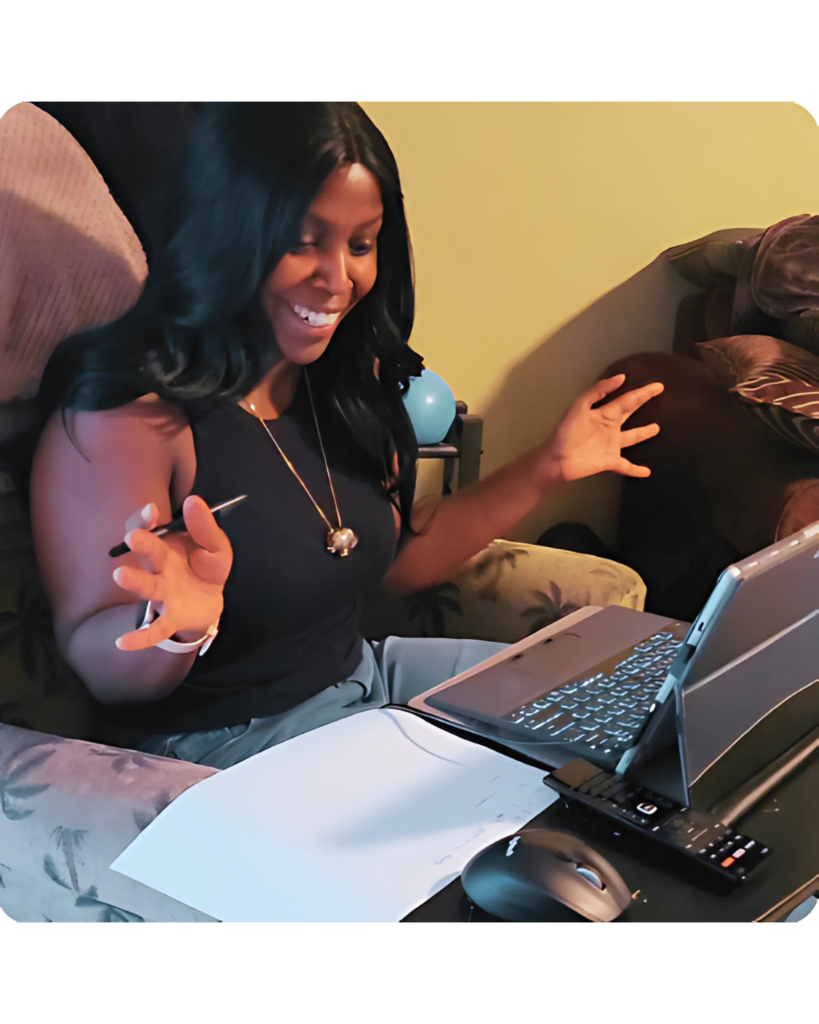
That looks like:
- Acknowledging the emotions before the numbers
- Normalizing the fear instead of dismissing it
- Moving at a pace that feels sustainable
I’m not here to tell you:
“You can’t shop.” “You can’t enjoy your life.” “You’ve messed everything up.”
I’m here to help you build a plan you can actually live with.
One that allows for joy and progress.
Intentional Spending Isn’t About Perfection
We talked on the podcast about everyday examples — Prime Day, Target runs, impulse purchases.
Not to shame anyone. But to highlight awareness.
Sometimes intentional spending looks like:
- Putting something in your cart and letting it sit
- Realizing you already own what you’re about to buy
- Choosing a go‑to brand that works instead of constantly chasing deals
(Yes, I’m officially a Hoka convert. Nurses know.)
These aren’t dramatic changes. They’re repeatable ones.
And that’s how real financial change happens.
What Financial Wellness Really Means to Me
Wellness is being able to make decisions without panic.
It’s sitting down with a big financial choice and knowing:
- You have options
- You have time
- You’re not cornered by fear
I shared a story about an unexpected building expense, a decision that had been looming for years and suddenly required action.
Because we had prepared, we were able to:
- Run the numbers
- Discuss our priorities
- Choose what worked best for us
Not react. Not spiral. Not feel forced.
That calm?
That’s wealth.

You Don’t Need a Perfect Start. You Need a Better Relationship With Money
One of the most powerful things I’ve learned is this:
Everyone has a money story.
Even people who look “set.”
Some have money but feel constant scarcity. Some earn a lot but don’t feel safe. Some grew up without examples of what healthy financial decisions look like.
The difference isn’t where you start. It’s whether you’re willing to learn and engage.
Especially now, when access to information, investing, and education is broader than ever.
You don’t need permission.
You need intention.
If This Resonated, I Want You to Hear the Full Conversation
This is a slice of the conversation I had with Nicole Gwanzura on the Wellness with EAC podcast.
In the episode, we go deeper into:
- Financial literacy for professional women
- Money and marriage during uncertainty
- How preparation reduces anxiety
- Why wellness includes financial peace
If you’re a smart, capable woman who wants her finances to feel as steady as the rest of her life, this episode is for you.
🎧 Click here to listen to the full episode of Wellness with EAC or click here to watch it on YouTube
(And if you find yourself nodding along, you’re exactly who this conversation was for.)